
The Silicon Squeeze: AI Pricing Power Lifts Chip Stocks
- Recent price hikes reflect a fundamental shift in negotiating power toward the semiconductor designers due to unprecedented AI-driven demand.
- For Advanced Micro Devices, this pricing strength validates its technological leadership and accelerates strategic growth in the lucrative data center market.
- Intel's reassertion of pricing power provides essential funding for its ambitious manufacturing and foundry turnaround strategy.
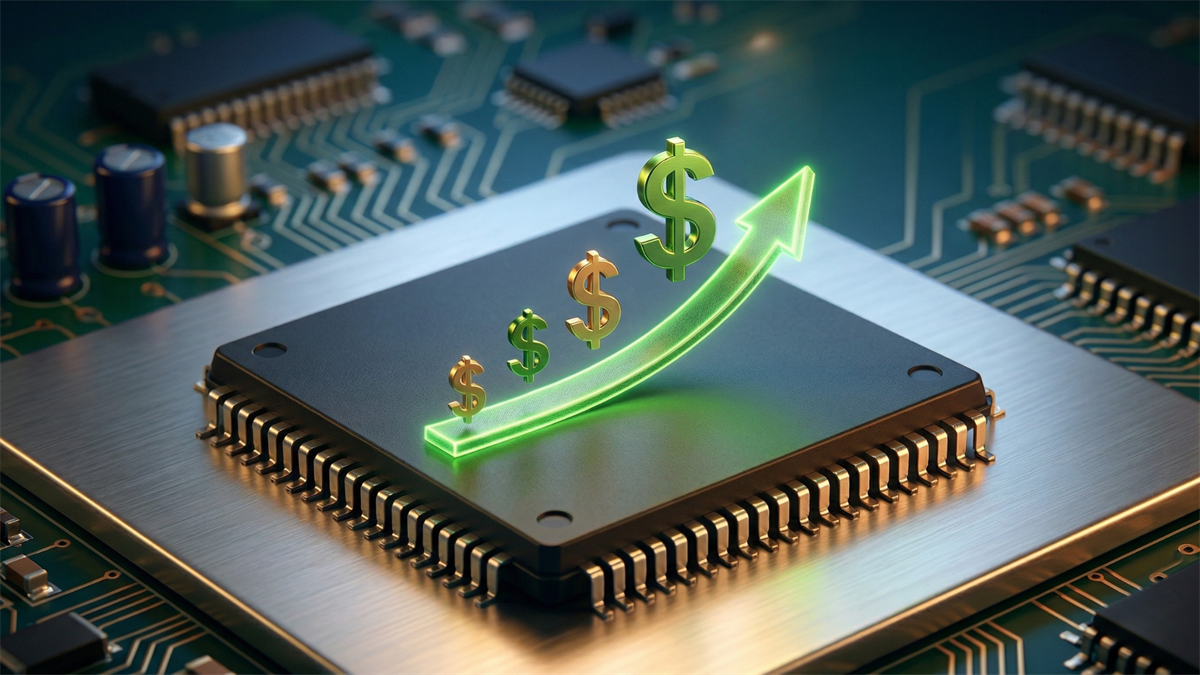
A powerful rally in the shares of semiconductor giants Intel (NASDAQ: INTC) and Advanced Micro Devices (NASDAQ: AMD) is sending a clear message to investors. Recent single-day surges of over 7% for Intel and more than 6% for AMD were not based on rumors or speculation. This sharp upward momentum was a direct market reaction to credible reports that both companies are preparing to increase the prices of their core central processing units (CPUs).
However, these price hikes are far more than a routine adjustment for inflation. They signal a fundamental and dramatic power shift within the technology supply chain. For years, large-scale PC and server vendors wielded immense negotiating power over their suppliers. That era is decisively ending. Driven by an unprecedented wave of demand for computational power, the designers of the world's most critical chips are now in the driver's seat. This newfound leverage is creating a potent and sustainable catalyst for their stocks and reshaping the economic landscape for the entire tech industry.
How AI Fueled a Demand Firestorm
The force behind this industry-wide supply crunch can be distilled into two letters: AI. The global technology sector is engulfed in an artificial intelligence (AI) arms race. Tech titans, along with enterprises across every industry, are investing billions to build the massive data center infrastructure needed to power generative AI and large language models. This has ignited a firestorm of demand for the high-performance processors at the heart of these systems.
This is not a simple uptick in orders; it is a structural change in the market. The complexity of AI models requires a density of computing power that is orders of magnitude greater than traditional cloud computing. As these tech giants aggressively compete to secure the advanced server CPUs and AI accelerators needed to gain an edge, they consume a massive portion of the world's finite chip manufacturing capacity. This creates a supply squeeze that cascades across all market segments, tightening the availability of processors for both everyday PCs and corporate servers. This dynamic has fundamentally increased the value of the underlying silicon, giving the companies that design it a level of pricing leverage not seen in years.
From Leverage to Profit: The New Margin Reality
This newfound pricing power is a powerful tailwind for both Intel and AMD, but it uniquely reinforces each company's distinct strategic narrative, bolstering the bull case for both.
AMD: An Offensive Strike From a Position of Power
For AMD, the ability to command higher prices is an offensive move. AMD has brilliantly executed its strategy in the lucrative data center market, where its EPYC server processors have steadily chipped away at Intel's market share.
With data center revenues recently surging by over 39% year over year and a healthy gross margin hovering around 51.5%, AMD is already firing on all cylinders.
This price increase acts as a powerful accelerant. The additional revenue flows almost directly to the bottom line, expanding margins and generating a torrent of free cash flow.
This capital is critical ammunition in its fight against NVIDIA (NASDAQ: NVDA) in the AI accelerator space, allowing for greater investment in its Instinct GPU lineup.
The fact that its hardware customers must accept these new prices is the ultimate validation of AMD's technological leadership and the indispensable role its products play in the modern data center.
Intel: A Critical Victory Funding a Historic Turnaround
For Intel, this pricing power is a desperately needed strategic and financial victory. Intel is in the midst of a historic and costly turnaround.
Intel’s IDM 2.0 strategy, a bold plan to regain manufacturing leadership and build a foundry business to compete with global leader Taiwan Semiconductor Manufacturing (NYSE: TSM), requires tens of billions of dollars in capital investment. A primary investor concern has been the sheer cost of this ambition. These price hikes serve as a crucial financial lifeline.
The additional high-margin revenue from its established CPU business provides a non-dilutive source of funding for its future.
It demonstrates that Intel still commands immense authority in the PC and enterprise markets, and that its products are so integral that the market itself will help underwrite its transformation. This reassertion of pricing power strengthens Intel's long-term investment case.
A Clear Forecast for a Shifting Market
A fundamental value shift is occurring within the tech sector. Profitability is flowing upstream from the hardware assemblers to the semiconductor designers who own the core intellectual property. This re-emergence of pricing power is not a temporary event but a durable catalyst, supporting a constructive and bullish outlook for Intel and AMD.
For investors, the next major checkpoint will be the companies' upcoming earnings calls, which should provide the first concrete data on gross margin expansion. Looking forward, the key to long-term success will be AMD's ability to sustain its data center momentum and Intel's disciplined execution of its foundry roadmap. In this new AI-driven era, the companies that design the essential building blocks of our digital world are firmly in control.
Stocks Mentioned in this Article
| Company | Current Price | Price Change | Dividend Yield | P/E Ratio | Consensus Rating | Consensus Price Target |
|---|---|---|---|---|---|---|
| Intel (INTC) | $43.04 | -2.4% | N/A | -537.32 | Reduce | $45.74 |
| Advanced Micro Devices (AMD) | $201.13 | -1.3% | N/A | 75.83 | Moderate Buy | $290.53 |
| NVIDIA (NVDA) | $167.33 | -2.3% | 0.02% | 34.15 | Buy | $275.95 |
| Taiwan Semiconductor Manufacturing (TSM) | $326.27 | +0.0% | 0.93% | 30.64 | Buy | $391.43 |